Where are the records if they aren't in the local Catholic parish?
You found the village and parish of your ancestors in Poland. Happily, you are sailing through the 19th century. Suddenly, a brick wall! You find absolutely nothing: no parents, no siblings, no one. Perhaps the surname disappears, or Szulc is not to be found but a Schultz appears instead. Did they move from another parish for better work or by marriage? Did they change their surname? Or is love the answer?
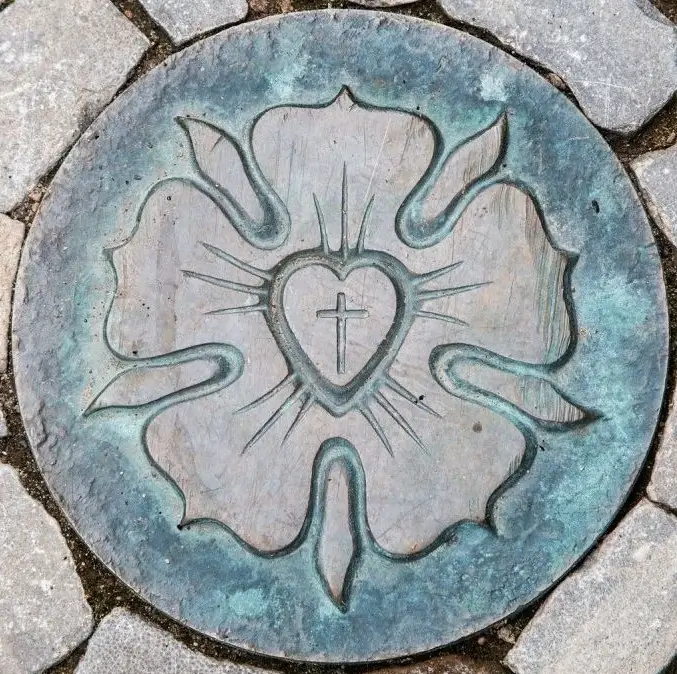
Have you considered that your ancestors could have been Lutheran?
Yes, the Protestants and Catholics did marry. The general requirement was for the Protestant to convert to Catholicism; or at least for the children to be raised as Catholics. There is a possibility that until this marriage some of your family behind that brick wall could have been a Protestant; and possibly of German heritage. Here, you will learn about the Protestant minority in Poland, the areas where they were concentrated, and where those records might be located.
Population changes in 20th century
These days, Poland is a country with the clear dominance of ethnically Polish people and a clear majority of Roman-Catholics with the other churches or religious organizations representing 150 000 Orthodox Christians, 70 000 Lutherans and 137 000 Jehovah Witnesses [1]. Such uniformity was not always the case. In 1931 Census, out of 31 million people living in Poland, 20 million were Roman-Catholic, 3.3 million were Greek-Catholic, 3.7 million were Orthodox, 800 000 were Protestants of various denominations and 3.1 million were Jewish. So, if you are looking for Polish ancestors, there is a chance they could have been Protestants.
Protestants in the past
The borders in Central and Eastern Europe changed quite a few times in the last 200 years. German territories before 1945 are the most likely to have a strong Protestant population. The best example is Wrocław / Breslau: in 1900, 58% of the city’s population was Protestant[2]. How it happened that the areas of today’s Western and North-Eastern Poland had big Protestant communities? In East Prussia, a political decision was made in 1525 abolishing the State of the Teutonic Order (Zakon Krzyżacki) and creating the first Protestant state – the Duchy of Prussia led by Albrecht Hohenzollern. In other areas, the Reformation was also popular among the local population up to the Thirty Years War (1648-1648) and the Counter-Reformation[3]. Protestantism became popular once again in the Lower Silesia after the Silesian Wars of mid-18th century, when the region became a part of the Germany. It was similar in the Western Pomerania which was also under the political and social influence of Prussia at that time.
We also need to mention the migration from the other parts of the German Empire and Western Europe. The industrialization meant the skilled workers, managers and directors were moving East – many were Protestant. It is possible that looking even further into the past, you will come across an ancestor from Germany or the Netherlands. As many Protestants moved to Germany after the WW2, it is also possible that you will find a distant cousin there now.
Regardless of the border changes after the First and Second World Wars, the areas where Protestantism was and still is most prevalent are Śląsk (Silesia) and Mazury. Both regions were under German influence for centuries and the Reformation was established as official denomination by some local rulers. If your ancestors lived in Wrocław, Szczecin or Gdańsk before 1945, there is a strong possibility they were Protestants, but they would rather be German than Polish. Due to ‘Akcja Wisła’ many Protestants, moved to Germany. Not only Germans from so called ‘Ziemie Odzyskane’, i.e. the Lower Silesia and Western Pomerania were forced to leave their homes, but also Polish Protestants who for generations lived in the Mazury area. The Poles coming from the East moved in and the churches that for centuries were Lutheran were changed into Roman-Catholic ones. An example of such change is St Elizabeth Church in Wrocław – before the WW2, the chief Lutheran church in Silesia, now the Roman Catholic church of the Polish Military.
Protestants today
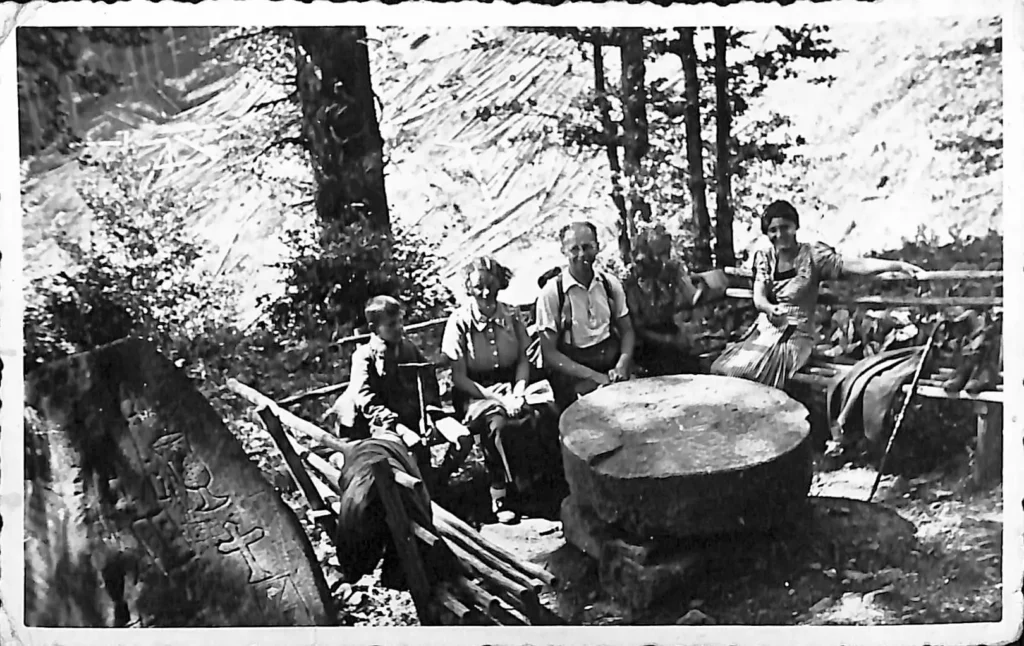
,Another Lutheran stronghold is Śląsk Cieszyński (Cieszyn Silesia). The Piast princes ruling Księstwo Cieszyńskie (Duchy of Cieszyn) were the vassals of the Czech Crown since 1327, and in 1545, Prince Wacław III Adam intorduced the Lutheran denomination as the official religion. During the Counter-Reformation, the county belonged to Austria and the local Protestants were persecuted. They would gather in so-called ‘Forest Churches’. One of them still survives on the slopes of Równica mountain in Ustroń, where a service takes place every year on Corpus Christi. The Treaty of Altranstädt in 1707 settled the rights of Lutherans in Silesia and six ‘Churches of Peace’ were erected. Still surviving as a Lutheran church is the Jesus Church in Cieszyn.
The Duchy of Cieszyn was divided after the WW1 between Poland and Czechoslovakia (Zaolzie). To this day in the County of Cieszyn, the Lutherans are a popular confession, with some towns like Wisła (yes, the same as the river, as the springs of Biała Wisełka and Czarna Wisełka start the longest Polish river here) are dominated by Protestants.
The Olympic gold medalist and World Champion in ski-jumping Adam Małysz, renowned writer Jerzy Pilch, the former Prime Minister and the Leader of the European Parliament Jerzy Buzek, and a very popular rally driver Kajetan Kajetanowicz are Lutherans from this area.
Forest Church at the slopes of Równica in Ustroń, Poland, 1930s
Where are the records kept?
In western Poland and in Mazury, the exodus of the population and takeover of the churches by the Roman Catholics meant that the Lutheran parishes ceased to exist as an organisation. Regardless of the character, once an organization closes its door, there is an obligation to take care of the remaining archives. Obviously, the church records have a great value: historical, cultural, sometimes even financial and therefore they were moved to the Polish National Archives (Archiwa Państwowe).
The National Archives
It is an emotional moment, but I am glad I followed the information. Discovering your family history can be like a rollercoaster. My great-grandmother Helena was a widow for 60 years and she knew the town where Jan was buried. I don’t think she had the details. She and her daughters never had a chance to visit – traveling to West Germany before 1989 was impossible, later it was impractical and expensive. Perhaps, I will be able to make it right and light a candle there.
German Archives
It is likely that some records from the Silesia, Pomerania and East Prussia are kept in Berlin and Lepizig as it was common practice before 1945 to send a copy of various documents, including BMDs to the regional or national authorities. The government wanted information and the local civil and church authorities were obliged to provide it. It is quite common to have more than one copy of the same document kept in various archives, however it is necessary to contact them directly and enquire about each parish. There may be gaps in the collections due to war damages, fires or officials’ negligence.
Parishes
Generally, the record keeping in the Lutheran parishes was very good – the level of literacy was quite high as the Protestants have been encouraged since the Reformation to read the Bible themselves. However, there are examples in the Austrian territories that the Protestants were obliged to register christenings, marriages and burials with a local Roman Catholic priest. It is a good practice to check both Lutheran and RC registers.
That is the case when the churches have always been Protestant, as pretty much everything is still in the hands of individual parishes. The richness of the collections is often breath-taking, but very rarely they have been professionally arranged, catalogued and fully opened to the public.
Are you ready for your genealogy adventure?
I am a professional genealogist, archivist, and research expert in Polish, Czech, and German genealogy. I help people to connect with their roots and support their citizenship applications. If you are inspired to dive into a fascinating world of history research, please contact me at dorotawalker@gmail.com.
[2] Kulesza, M., The Protestant Minorities in Silesia, Region and Regionalism no 6, https://dspace.uni.lodz.pl/xmlui/bitstream/handle/11089/3775/R%40R_2003_Kulesza.pdf?sequence=1&isAllowed=y.